

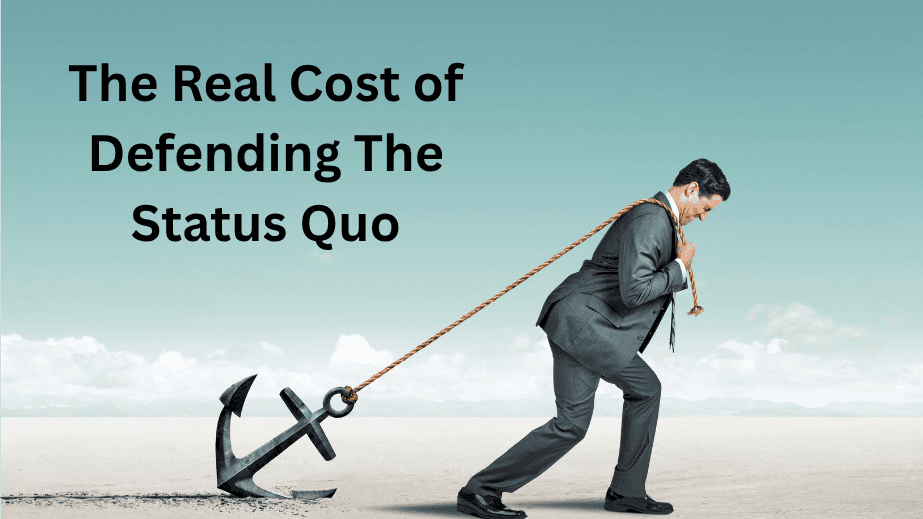
Leaders talk about innovation, yet most teams spend their days protecting what already exists. It shows up in meetings that stall out, spreadsheets no one wants to touch, and in overtime hours spent patching gaps instead of fixing them. The status quo feels safe in the moment, but it drains time and energy until the organizations carrying more weight than it can move.
The first cost is time. Workarounds and repeated data entry rarely look expensive at first, but over time they grind down an entire team. People adapt to bad systems, which is why leaders often miss the drag. The hours blend into weeks and months, and what feels like hard work is really just effort poured into a structure that can’t deliver.
The second cost is morale. Talented people rarely burn out because the work is difficult; they burn out because the work is pointless. When their time is spent propping up broken processes instead of solving meaningful problems, disengagement follows. That disengagement becomes resignation, and companies lose their best people not to competitors but to the frustration of spending their best hours on work that never should have existed.

The third opportunity cost. Defending the status quo is just another way of defending waste, and while one company pours resources into protecting inefficiency, competitors invest in tools that give their teams real leverage. By the time the defenders realize the ground has shifted, the gap has already widened beyond their reach.
At Citizens Consulting Group we focus on building internal tools that people actually adopt. We don’t push new licenses or add complexity; we take the Microsoft stack you already pay for and turn it into systems that eliminate bottlenecks, connect data, and free teams from work that never should have been manual in the first place.
One farm improved margins the moment feed costs and milk production were visible side by side. A chocolate company finally traced its sustainability commitments without drowning in spreadsheets. On manufacturing floors, rework dropped because the tools were designed by the people who used them. Each story makes the same point: the expensive part wasn’t the new build, it was all the years spent carrying the old way forward.
If your team’s exhausted from fighting change, the answer isn’t telling them fight harder and defend what no longer works but to finally replace it. The tools you need are already in your stack, and the expertise to put them to work is available. The real decision is whether you’ll keep absorbing the hidden costs of the status quo or start reclaiming the time and energy your people deserve.
Stop paying the hidden tax of inefficiency. Put the Microsoft tools you already own to work and start building the leverage your team deserves.